
Marks and grade calculator
Read a list of marks, work out the total, average and grade, and print a tidy report.
Practises
- Input and type conversion
- Conditions
- Lists and loops
Python reads almost like plain English, which makes it a good first programming language. You learn it by writing small, working programs from the first lesson, live and one-to-one with a tutor who watches you code and shows you how to fix your own mistakes.
Short answers to the questions students and parents ask first. Each one is explained in more detail further down the page.
Python is a general-purpose language used to automate everyday tasks, analyse data, build machine learning models, run web back ends and do scientific work. Many schools and universities also teach programming with it because its code is short and readable.
Complete beginners, school and university students whose course uses Python, and adults who want a first language for automation or data work.
No programming experience. You should be comfortable using a computer, and you need a laptop or desktop where Python can be installed. The tutor helps with the installation in the first lesson.
Python fundamentals, variables and data types, conditions and loops, functions, lists, tuples, dictionaries and sets, object-oriented programming, and error handling and files, with practical exercises and small projects throughout.
Live and one-to-one on Microsoft Teams or Zoom. You share your screen and write the code yourself while the tutor explains, asks questions and helps you debug. Nothing is pre-recorded.
Book the free 30-minute introductory class with the form on this page or on WhatsApp. We reply within 24 hours, and in the class the tutor checks your level and suggests where to begin.
The topics in the order they are usually taught. The tutor adjusts the order and depth to your level, and to your school or university syllabus if you share it.
Examples of exercises used in lessons. The tutor picks ones that suit your level and interests, and you write every line yourself.
Read a list of marks, work out the total, average and grade, and print a tidy report.
Practises
The computer picks a random number and gives hints until you guess it, counting your attempts.
Practises
Add, search and delete contacts stored in a dictionary, and keep them in a text file between runs.
Practises
Model products as objects, track stock, and refuse impossible sales with a clear error message.
Practises
The tutor explains, reviews your code and helps you find bugs, but does not write graded assignments or lab tasks for you.
These are the aims of the lessons. Progress depends on where you start and how much you practise, and we never promise grades or results.
Python is a beginner course: most students start with no experience. You do not have to start at the first topic, though.
Level: Beginner
You have never programmed. You begin with print(), variables and input, and move on only when each idea is clear.
Level: Beginner to intermediate
Your course already uses Python. Lessons follow your syllabus and help with the topics you find hard, such as loops, functions or files.
Level: Intermediate
You can write loops and functions, but data structures, classes or error handling feel shaky. The free class finds the gaps, and lessons start there.
Python is often the first step. These courses build on what you learn here.
Take classes, inheritance and design further, in Python or the language your course uses.
Once you program confidently, learn how lists, trees and graphs work and how fast algorithms run.
Add a second language and make web pages that react to clicks and forms.
Compare Python with JavaScript, C++ and the other programming courses.
Python classes are taught by the programming tutors below. Each profile is published with the tutor’s consent. When you get in touch, we suggest a tutor who suits your level and timetable.
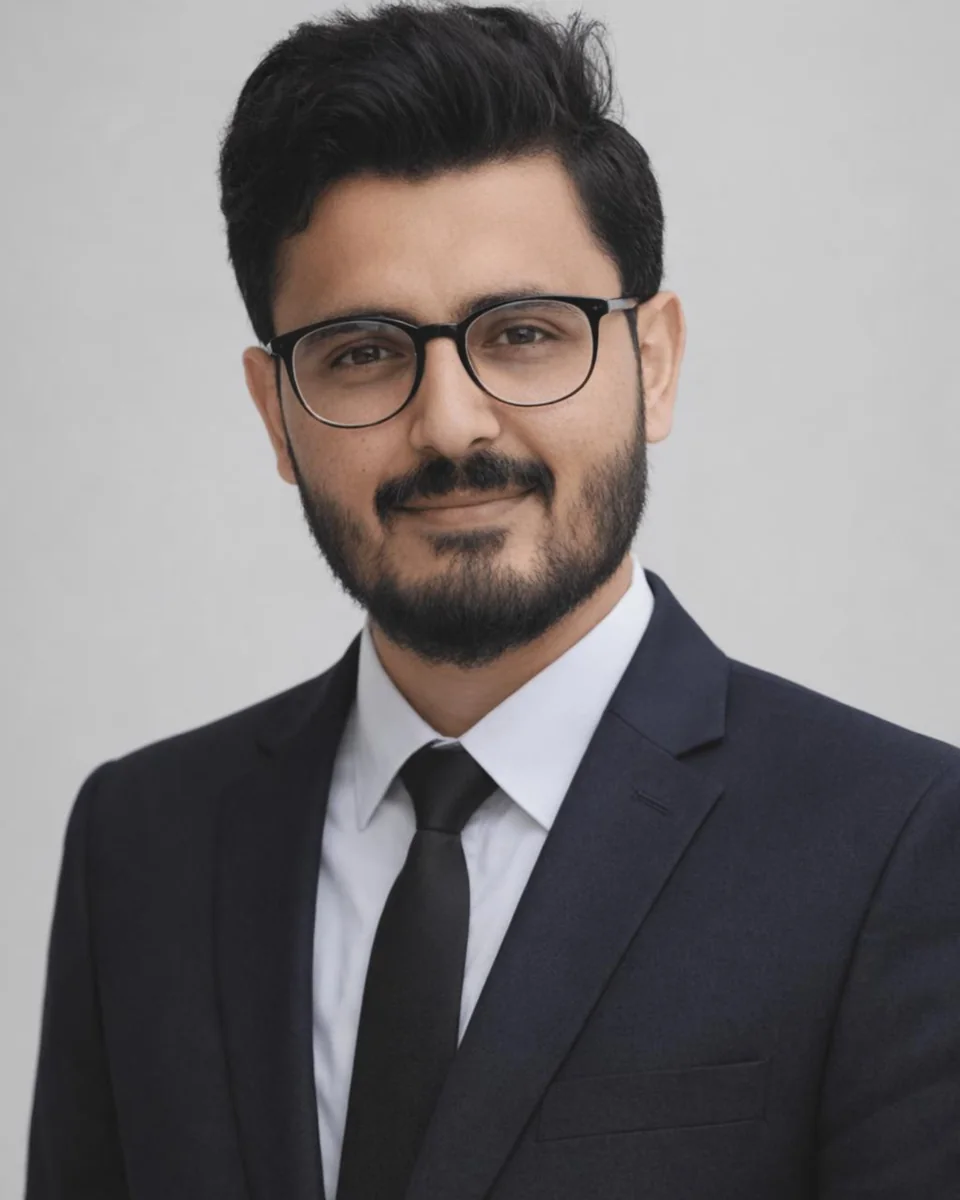
Tutor at My Subject Hub
Python, JavaScript, C++, Java and C. One flat monthly fee per course, whatever the number of classes a week.
Object-Oriented Programming, Data Structures and Algorithms and Cybersecurity use the monthly plans, like academic subjects.
See all fees and plansPython 3, the current version. Python 2 is no longer supported. If an old tutorial writes print without brackets, the tutor shows you the Python 3 way.
No. School-level arithmetic is enough for this course. Some fields that use Python, such as data science and machine learning, need more maths later, but you can learn to program first.
For most beginners, yes. The syntax is short, there are no semicolons or type declarations to remember, and you see results quickly. If your school or university course uses C++, starting with C++ may save you time.
Yes, if they can use a computer comfortably. The tutor sets the pace and examples for the student, and follows the order of their Computer Science syllabus if it uses Python.
Python 3 and a code editor such as VS Code, IDLE or the one your course uses. They are free, and the tutor helps you set them up in the first lesson.
Most students go deeper into Object-Oriented Programming, then Data Structures and Algorithms. Others add JavaScript to build web pages. The tutor suggests a next step that fits your goal.
There is no fixed length. It depends on where you start, how many lessons you take each week and how much you practise between them. The tutor suggests a plan after the free class. The fee is $60 a month (SAR 180 in Saudi Arabia), whatever the number of classes a week.
Meet the tutor, write a few lines of Python together, and find out where to start. Fill in the form and we will arrange a time.
Can’t use WhatsApp? Call +92 317 5700456 or email info@mysubjecthub.com.